

Aruba Private Driver Reviews for Stress-Free Trips
- September 22, 2026
- Uncategorized
A private driver can set the tone for your Aruba vacation before you ever reach your villa. After a flight, luggage claim,…
Read MoreBy using Aruba Hostess, you accept our Privacy Policy and our Cookie Policy. Find out more. Close
 by Aruba Hostess
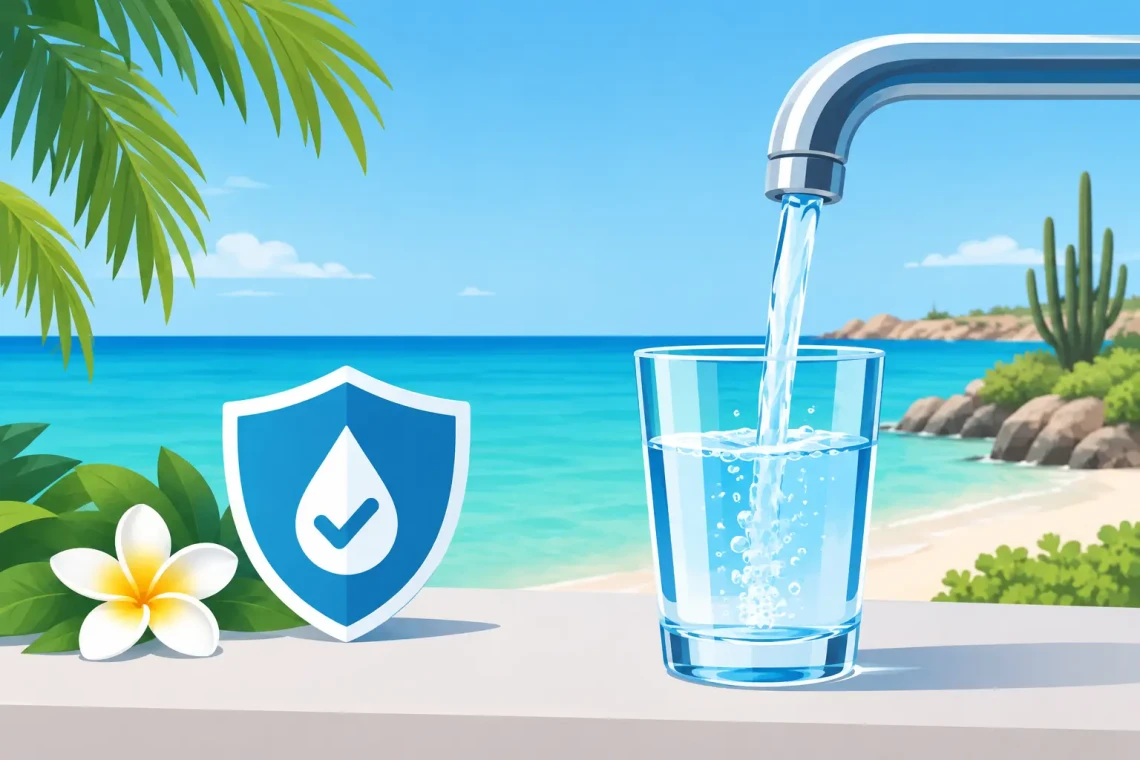
The first cold glass of water after landing can be surprisingly reassuring. So, is Aruba tap water safe for your vacation? Yes. Aruba’s public tap water is widely regarded as safe to drink, and many visitors find it clean, refreshing, and comparable to bottled water. For families, villa groups, and celebration travelers coordinating a full island stay, that is one less detail to worry about.
Aruba does not rely on abundant natural freshwater sources. Instead, the island has long invested in producing drinking water through desalination, then carefully treating and monitoring it before it reaches homes, resorts, restaurants, and vacation rentals. That infrastructure is a meaningful advantage when you are deciding what to stock for a week at the villa, whether to order cases of bottled water, or if the ice in your first welcome cocktail is a concern.
For most travelers, yes. Aruba’s tap water is potable, meaning it is intended for drinking and food preparation. It is commonly used for coffee, cooking, brushing teeth, filling reusable bottles, and making ice. At established hotels, restaurants, and professionally managed vacation homes connected to the public supply, visitors can generally drink from the tap with confidence.
The water is produced primarily through seawater desalination. Salt and impurities are removed, and the water is treated to meet drinking-water standards. Because the island takes water production seriously, the system is often a point of local pride.
That said, “safe” and “preferred” are not always the same thing for every traveler. A guest with a very sensitive stomach, a particular taste preference, or a physician-directed health need may still choose bottled or filtered water. That is a comfort decision, not usually a sign that Aruba’s tap water is unsafe.
Travelers sometimes expect tap water on a Caribbean island to have a strong mineral taste or a noticeable chlorine smell. Aruba can be a pleasant surprise. Desalinated water often tastes lighter or cleaner than water from mineral-rich wells, although individual perception varies.
The taste may also be different from what you drink at home in the United States. Some guests love it immediately, while others prefer water chilled in the refrigerator or poured over ice. If your group is renting a villa, having a few reusable bottles, a chilled water dispenser, or a modest supply of bottled water can make hydration easy without over-ordering single-use plastic.
For a long beach day, a catamaran outing, or a golf afternoon in Aruba’s sun, the larger issue is usually not water quality. It is drinking enough water. The trade winds can make the heat feel manageable while your body is still losing more fluid than you realize.
Most vacation properties and hospitality venues use Aruba’s public water supply. That means the tap water at a well-managed villa is generally suitable for drinking, cooking, and washing produce. It is also typically fine for brushing teeth, including for children who may swallow a little water.
There are a few practical exceptions worth keeping in mind. A property’s plumbing, storage setup, or maintenance condition can affect the guest experience independently of the island’s water treatment. If you are staying in a private home, especially one that is older, newly renovated, or located in a less typical accommodation setting, ask the host or property manager if the kitchen tap is connected to the municipal potable-water supply. This is a simple question, and a professional host should be able to answer clearly.
At restaurants, bars, and resorts, ice is generally safe when it is made on-site with the public supply or delivered by an established vendor. The same applies to mixed drinks, smoothies, and fountain beverages at reputable venues. If a drink arrives with ice, there is no reason to treat it as automatically off-limits simply because you are in the Caribbean.
Bottled water is optional for most guests, but it can still be useful in certain situations. The goal is convenience and comfort, not unnecessary worry.
If someone in your party is immunocompromised, managing a specific medical condition, recovering from illness, or following medical guidance about water intake, follow their clinician’s recommendations. Parents preparing infant formula may also prefer to use bottled water for consistency or personal peace of mind, though potable tap water is commonly used. When in doubt, use the approach your pediatrician recommends for your child.
Bottled water can also be convenient for day trips. Keeping cold bottles ready in the car, beach bag, or cooler avoids relying on wherever you happen to stop. For large groups, pre-stocking a mix of still water, sparkling water, and electrolyte drinks is often more practical than purchasing drinks in small batches after everyone has arrived.
There is a trade-off. Ordering excessive cases of water creates waste and takes up valuable refrigerator space, particularly in a villa where you are also storing groceries, mixers, and meals for the group. A balanced order, supplemented by tap water and reusable bottles, tends to work best.
A safe water supply is only part of feeling well on vacation. Aruba’s warm, dry conditions call for a little planning, especially if your itinerary includes pool time, beach clubs, off-road tours, snorkeling, fishing, or an afternoon cruise.
Start drinking water early in the day rather than waiting until you feel thirsty. Bring water with you when leaving the villa, and add an electrolyte drink after extended sun exposure, alcohol, or strenuous activity. Children and adults who are enjoying the pool may need more reminders than usual because they do not always notice how much fluid they are losing.
Alcohol deserves a little extra attention on birthday trips, bachelor and bachelorette weekends, and group celebrations. A cocktail at sunset is part of the experience, but alternating drinks with water can keep a fun evening from becoming a difficult next morning. This small habit makes a real difference when the group has an early private charter, a chef breakfast, or a full day of excursions planned.
Water conditions can change anywhere after unusual weather, construction, or a local infrastructure issue. If Aruba’s authorities or your accommodation issues a temporary advisory, follow it exactly. Your hotel, villa manager, or concierge should tell you whether water needs to be boiled, avoided for drinking, or used only for certain purposes.
Do not rely on social media rumors or assume that a precaution applies island-wide. Ask your property manager for current, location-specific guidance. In the rare case of an advisory, bottled water can be used for drinking, preparing food, making coffee, brushing teeth, and mixing infant formula, according to the instructions provided.
For travelers staying in a villa, this is one reason professional property management matters. Clear communication, reliable maintenance contacts, and prompt support turn a potential inconvenience into a straightforward adjustment.
For most Aruba vacations, you do not need to build your itinerary around drinking water. Plan to use the tap for everyday hydration at your accommodation, coffee, cooking, and brushing teeth. Keep chilled bottles or filtered water available for guests who prefer it, and pack water for any time you will be away from the property for several hours.
If you are coordinating a larger stay, consider each guest’s habits before arrival. A family with young children may want easy-to-grab bottles by the door. A wellness-focused group may appreciate sparkling water and electrolyte options. A celebration group may want plenty of water stocked alongside champagne, wine, and cocktail ingredients. Small details like these create a more comfortable, polished arrival.
Aruba Hostess can help organize thoughtful arrival pre-stocking around your group’s preferences, so cold water and the rest of your essentials are ready when you walk through the door. Then you can spend less time shopping and more time settling into your island experience.
Bring your favorite reusable bottle, fill it confidently, and keep it close between beach plans, pool afternoons, and sunset dinners. In Aruba, staying hydrated should feel as easy as the vacation itself.

A private driver can set the tone for your Aruba vacation before you ever reach your villa. After a flight, luggage claim,…
Read More
A proposal should feel effortless to the person being surprised, even when there is a great deal of thoughtful coordination behind it….
Read More
A boat day can become the moment everyone talks about long after an Aruba group trip ends. But choosing between a catamaran…
Read More
Is Aruba tap water safe? Learn... Read More

Read Aruba private driver reviews with... Read More

Learn how to plan surprise proposal... Read More